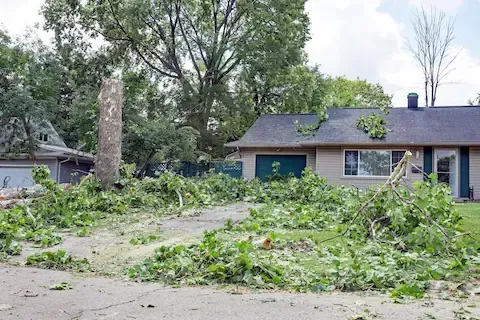
What to Do After a Tree Falls in Oregon City Backyard
After a tree falls in your Oregon City backyard, stop and assess the situation before touching anything. Check for downed power lines, gas leaks, or structural damage to your home. Once you confirm the scene is safe, photograph everything for your insurance claim. Call your homeowner's insurance company next, then contact a licensed Oregon City tree crew to evaluate the trunk and root system. Do not attempt to move a leaning or partially fallen tree on your own. The weight and tension stored in a damaged trunk can shift violently without warning.
Is It Safe to Go Near a Fallen Tree?
Not immediately. Your first priority is to stay back at least one full tree-length from the fallen trunk. In Oregon City, Clackamas County emergency services recommend treating any downed tree near a structure as a hazard until a professional evaluates it. Look for wires draped over or under the tree before approaching. If you smell gas, leave the yard entirely and call 911. Only enter the area once utility workers or a certified arborist confirms the zone is clear.
What Should You Document Before Calling Anyone?
Document everything from a safe distance using your phone. Take wide shots that show the full fall path, the root ball if it pulled up, and any contact points with your fence, roof, or outbuildings. Close-up photos of damage to your home's fascia, siding, or gutters will support your insurance claim. Note the time the tree fell and any weather conditions. Oregon City homeowners dealing with storm events in the Willamette Valley often file claims alongside neighbors, so having thorough documentation speeds up adjuster response times significantly.
When Should You Call Your Insurance Company?
Call as soon as you have documented the scene, ideally within the same day the tree falls. Most homeowner policies in Oregon cover tree removal when the tree damages a structure, but coverage limits vary. Your insurer may send an adjuster before any debris is moved. Ask your agent specifically whether your policy covers the cost of storm cleanup beyond just structure repair. Some policies separate debris removal from structural repair costs, which affects how you prioritize the work order with your tree crew.
Should You Try to Remove the Tree Yourself?
No. A fallen tree, especially one that is partially suspended or leaning against a structure, holds enormous tension in the wood fiber. Cutting the wrong section releases that energy unpredictably. Oregon City residents should leave this work to licensed crews equipped with rigging, wedges, and load-rated equipment. Attempting DIY removal of a large tree on a residential lot in Clackamas County has resulted in serious injuries, secondary roof damage, and crushed fencing that wasn't originally affected by the fall. Let professionals assess the wood stress before any chainsaw work begins.
What Happens During a Professional Tree Removal After a Fall?
A certified crew will first assess the load and determine whether the trunk is pinning anything structural. They will work in sections, using ropes and rigging to control each cut piece as it comes down. Root ball stabilization may be needed if the tree pulled soil away from a foundation or retaining wall. After the main trunk is sectioned, the crew chips or hauls branches and debris. If a stump remains, grinding is typically scheduled as a separate step. For more on recovering from winter events, read more on ice storm tree damage to understand what your yard may face in the months following a major storm event.
How Long Does It Take to Clear a Fallen Tree?
Most single-tree removals on a standard Oregon City residential lot take between two and six hours depending on tree size, access, and proximity to structures. Larger conifers common in the Pacific Northwest, such as Douglas fir or western red cedar, may require a full day if the trunk is over 36 inches in diameter or has fallen across multiple structures. Emergency response crews often prioritize calls where the tree has penetrated a roof or blocked a main vehicle exit. Routine fallen trees in open yard areas are typically scheduled within 24 to 72 hours of your call.
What Do You Do With the Wood After Removal?
Oregon City homeowners have several options. Firewood-length sections can be split and stacked if you have a fireplace or wood stove, which is common in homes throughout the Beavercreek Road corridor and the Redland area south of town. Chipped material can be used as garden mulch or left as a delivery if the crew offers that service. Large rounds from old-growth-adjacent trees occasionally have milling value. Ask your crew whether they haul debris off-site or leave it for you to manage, and confirm any associated fees before work begins so you aren't surprised by the final invoice.
