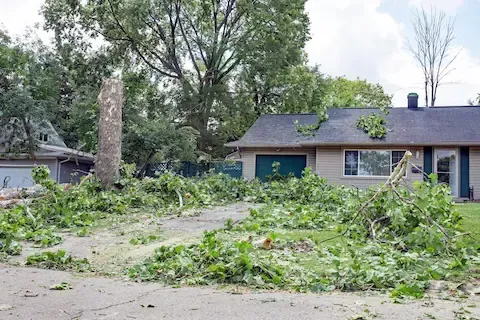
Ice Storm Tree Damage Recovery for Oregon City Yards
Ice storms create unique challenges for Oregon City homeowners, leaving behind damaged trees that pose ongoing safety risks and require strategic recovery approaches. Unlike wind damage that typically results in clean breaks, ice accumulation causes trees to fail in complex ways that demand careful assessment and staged removal techniques.
Understanding Ice Storm Tree Damage Patterns
Ice storms affect trees differently than other weather events, creating distinctive damage patterns that Oregon City residents should recognize. The weight of accumulated ice causes branches to bend beyond their natural flexibility, resulting in partial breaks, split bark, and compromised structural integrity that may not be immediately visible.
Large mature trees often suffer from split crotches where major branches meet the trunk, a type of damage that can worsen over time as the tree attempts to heal. These splits create weak points that become increasingly dangerous during subsequent weather events. Professional storm damage assessment and cleanup services can assess whether split crotches require immediate removal or can be stabilized through proper pruning techniques.
Smaller branches frequently break partially, creating hanging limbs that remain connected to the tree by strips of bark and cambium. These hanging branches pose immediate safety hazards and can damage healthy portions of the tree if left unaddressed. The weight distribution changes as ice melts and refreezes, causing additional stress on already weakened connection points.
Immediate Safety Assessment and Priority Actions
Safety assessment should be your first priority following ice storm damage in Oregon City. Walk your property from multiple angles to identify hanging branches, leaning trees, and damage near structures or power lines. Document damage with photographs before beginning any cleanup work, as insurance claims often require visual evidence of storm-related destruction.
Remove ice accumulation carefully from small branches that you can safely reach, but avoid shaking or pulling on branches that may have hidden damage. The sudden release of ice weight can cause damaged branches to snap unpredictably. Focus on clearing walkways and driveways of debris before attempting any tree work.
Contact utility companies immediately if you observe damage near power lines, even if lines appear intact. Ice-damaged trees can fail days or weeks after the initial storm, particularly when warming temperatures cause rapid ice melt and create additional stress on compromised branches.
Staged Removal Techniques for Different Damage Types
Staged removal prevents additional damage to healthy portions of the tree while addressing immediate safety concerns. Begin with completely severed branches and debris on the ground, working systematically from the outside of the tree toward the trunk. This approach allows you to assess the full extent of damage as you progress.
Hanging branches require careful attention to the remaining connection points. Make relief cuts to remove weight before making final cuts near the branch collar, preventing bark stripping that can create entry points for disease and insects. Use proper three-cut pruning techniques even on damaged branches to promote healing and maintain tree health.
Split trunks and major branch failures often require professional assessment before removal. These situations involve significant weight and unpredictable failure patterns that can cause injury or property damage if handled improperly. Oregon City's wet climate means that damaged bark areas are particularly susceptible to fungal infections if cuts are made incorrectly.
Timing Considerations for Oregon Climate
Oregon City's winter and spring weather patterns influence the urgency and timing of tree damage recovery work. Periods of warming followed by refreezing can worsen existing damage, making prompt action essential for preserving tree health. However, working on frozen or ice-covered trees presents additional safety risks that must be carefully evaluated.
Plan major removal work for periods when temperatures remain above freezing for at least 24 hours, allowing ice to melt completely and revealing the full extent of damage. Wet bark and branches become slippery and unpredictable, requiring extra caution and potentially specialized equipment for safe removal.
Protecting Undamaged Portions During Recovery
Preserve healthy branches and trunk sections during cleanup to maximize the tree's recovery potential. Avoid using climbing spikes on trees that will remain standing, as these create wounds that compromise the tree's natural defense systems. Focus removal efforts on clearly damaged sections while protecting bark and cambium on remaining healthy portions.
Support techniques such as cabling or bracing may be appropriate for trees with split crotches that retain structural value. These interventions can prevent further damage while allowing the tree to develop new growth patterns that compensate for lost branches. Professional evaluation determines whether support systems are viable or if complete removal is necessary.
Clean all cutting tools between trees to prevent disease transmission, particularly important in Oregon City's moist climate where fungal pathogens spread readily. Proper sanitation practices during cleanup work protect not only the damaged trees but surrounding healthy vegetation as well.
Recovery Planning and Long-term Tree Health
Develop a recovery timeline that balances immediate safety needs with long-term tree health considerations. Trees stressed by ice damage require time to redirect energy toward healing and new growth, making additional pruning or treatment timing critical for successful recovery.
Evaluate the overall landscape impact of damaged trees and plan replacement strategies for trees that cannot be saved. Oregon City's growing season and precipitation patterns affect establishment success for new plantings, with fall planting often providing better results than spring installation for most tree species.
Monitor recovered trees throughout the following growing season for signs of stress, disease, or secondary damage. Ice-damaged trees often show delayed effects as the full impact of root damage or internal injuries becomes apparent over time. Our guide to spring storm cleanup steps provides additional guidance for ongoing tree care following winter weather damage.
Consider professional consultation for valuable mature trees that suffer significant damage but retain potential for recovery. Expert assessment can identify treatment options and recovery strategies that preserve established landscape elements while ensuring ongoing safety for your Oregon City property.
