Summer Drought Tree Stress in Oregon City Yard Trees
Oregon City sits at the edge of the Willamette Valley, where summers have grown noticeably drier and longer over the past decade. What was once a mild Pacific Northwest season now regularly stretches into weeks of low rainfall and temperatures that push into the 90s. For yard trees — whether a big-leaf maple shading your back patio or a western red cedar lining your property edge — that extended heat and drought adds up to real physiological stress. Understanding what that stress looks like, why it happens, and what you can do about it is worth every homeowner's attention before the dry season peaks.
Why Summer Drought Hits Oregon City Trees Hard
Most trees common to Oregon City yards — including Douglas fir, big-leaf maple, Oregon white oak, and western red cedar — evolved in a climate with relatively wet winters and moderate summers. They draw heavily on soil moisture stored from winter and spring rains. When June through September brings little to no rainfall, that stored moisture depletes faster than roots can compensate, especially in compacted urban soils typical of residential yards around Canemah, Beavercreek Road, and the older neighborhoods near downtown.
Urban conditions make drought worse. Paved driveways, concrete walkways, and compacted lawn soil all reduce the amount of water that actually reaches tree roots. Heat radiating off hard surfaces raises local temperatures several degrees above what you'd find in a forested setting. Trees planted in strips between sidewalk and street face the worst combination: root space restriction, reflected heat, and minimal rainfall interception from the tree canopy itself.
What Drought Stress Actually Looks Like
Drought stress in Oregon City yard trees often gets misread as disease or pest problems, which leads homeowners to treat the wrong issue. Knowing the signs helps you respond correctly.
- Leaf scorch on maples: Brown, crispy margins on leaves — especially toward the tips — are a classic sign. Big-leaf maples are particularly visible about this because their large leaf surface loses moisture rapidly. Scorched leaves may drop early, sometimes as soon as July or August.
- Needle drop on conifers: Western red cedars and Douglas firs often shed interior needles during drought, turning them brown before dropping them. This is frequently misidentified as disease. A drought-stressed cedar dropping interior needles from last year's growth is behaving normally under stress — but the tree is still depleted.
- Wilting or drooping foliage: New growth on younger trees may wilt during peak afternoon heat, even if the soil has some moisture. This is the tree rationing water to protect its vascular system.
- Premature fruit or seed drop: Trees under stress will sometimes abort fruit or seeds early as an energy conservation response.
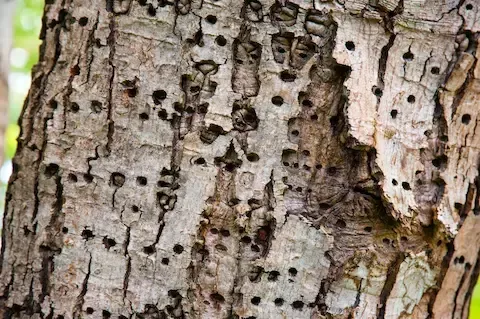
- Bark cracks or sunscald: Young or thin-barked trees — including certain ornamental cherries popular in Oregon City neighborhoods — can develop vertical bark cracks or surface damage from intense sun combined with moisture stress.
If you're seeing any of these symptoms, drought should be your first suspicion before reaching for a fungicide or pesticide. For more on what killing maple tree issues specific to this region, that breakdown helps separate drought damage from other causes.
Watering Trees Correctly During Oregon City Summers
The instinct many homeowners have is to water more frequently and in shorter sessions. For trees, that approach backfires. Frequent shallow watering encourages roots to stay near the surface, making trees more vulnerable to drought in the long run. Deep, infrequent watering trains roots to go deeper where soil moisture is more stable.
For established trees in Oregon City yards, a good summer watering approach looks like this:
- Water deeply once or twice per week during dry stretches, rather than lightly every day.
- Apply water slowly to allow absorption — a soaker hose or drip system laid under the drip line of the tree is more effective than sprinklers.
- Target the area under the canopy edge, not just the base of the trunk. Most feeder roots extend out to the drip line and beyond.
- Water in the early morning to reduce evaporation and give foliage time to dry, which reduces fungal pressure.
- For large established trees, a single deep watering session delivering 10 to 15 gallons per inch of trunk diameter is a reasonable starting benchmark.
Newly planted trees — particularly those installed within the past two or three years — are far more vulnerable than established trees. Their root systems haven't expanded enough to draw from deep soil reserves, so they need more attentive supplemental watering through the entire dry season. If you planted a tree in spring, plan to water it consistently through October, not just the hottest weeks of summer.
Mulching as a Drought Defense
One of the highest-value things you can do for Oregon City yard trees heading into summer is to apply a deep ring of wood chip mulch. A 3 to 4 inch layer of coarse wood chips spread from about 6 inches away from the trunk out to the drip line dramatically reduces soil moisture loss, moderates soil temperature, and gradually improves soil structure as it breaks down.
Keep mulch away from direct contact with the trunk to prevent moisture accumulation against the bark. Volcano mulching — the cone-shaped pile pushed against the trunk that you see in many local neighborhoods — does more harm than good. Flat and wide is the correct approach.
When Drought Stress Opens the Door to Disease
A drought-stressed tree isn't just suffering from thirst. Its immune and defensive responses are compromised. Bark beetles, for example, are far more successful at attacking conifers that are already water-stressed because the tree can't produce enough resin to repel them. Fungal pathogens that a healthy tree would resist can gain footholds in tissue weakened by moisture stress.
This connection between drought stress and disease is why addressing drought symptoms early matters beyond the immediate cosmetic damage. Proper disease management for Oregon City trees often starts with correcting the underlying cultural conditions — including drought stress — rather than treating only the visible pathogen or pest. A tree that's been adequately watered and mulched through dry summers simply has more capacity to fend off secondary problems.
Practical Steps Before the Dry Season Peaks
If you're in the Clackamas County area and heading into the back half of summer without having watered your trees much yet, it's not too late to help. Start deep watering now, apply mulch if you haven't already, and watch for the symptoms described above. Avoid heavy pruning during drought stress — removing significant foliage when a tree is already struggling adds another demand on its limited resources. Light, targeted pruning for dead or hazardous limbs is fine, but major structural pruning is better timed for fall or early winter after rains return.
Oregon City's tree canopy is one of the features that makes the community livable through hot summers. Keeping those trees healthy through dry seasons takes consistent attention, but the interventions are straightforward and the results compound over time as root systems deepen and soils improve. A little water and mulch now adds years to the life of trees that took decades to grow.
