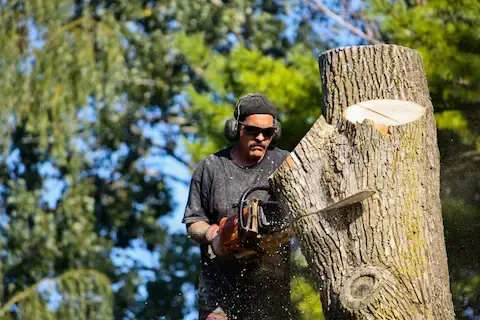
Summer Tree Removal Timing Across Oregon City Yards
Summer in Oregon City brings a stretch of dry, predictable weather that creates genuinely favorable conditions for tree removal work. When the ground is firm and access routes through your yard are dry, the practical logistics of the job shift meaningfully in your favor. Understanding how seasonal timing interacts with property conditions, tree biology, and equipment access helps you make a more informed decision about when to schedule work rather than simply reacting to a problem after it grows worse.
Why Summer Conditions Favor Tree Removal Logistics
Oregon City's dry season typically runs from late June through September, and during this window the soil throughout the region firms up considerably. Clay-heavy soils that stay saturated through the wet season can hold standing water well into spring, leaving yards vulnerable to deep rutting from heavy equipment. By midsummer, those same soils compact enough to support machinery without leaving lasting damage to lawn areas or garden beds alongside the work path.
Crew access also improves when vegetation is at full leaf. That may seem counterintuitive, but knowing exactly how large a canopy has grown helps arborists make more precise cuts and assess overall crown weight before rigging begins. Leafed-out trees reveal their true structure and allow experienced crews to identify weak branch unions, included bark, and imbalanced weight distribution that might not be obvious during dormancy.
Tree Health Conditions That Make Summer Removal the Right Call
Some trees reach a point where waiting until fall or winter introduces unnecessary risk. A large Doug fir on a Canemah or Beavercreek Road property showing significant deadwood, soft bark, or visible fungal conks at the root flare is not going to improve with time. Summer removal addresses those hazards before fall wind events arrive, which is when weakened trees are most likely to fail unpredictably.
Pest pressure also informs the timing decision. Trees already under attack from bark beetles or other boring insects become more attractive to nearby healthy trees if left standing through the warmest months. Removing an infected host during summer interrupts that cycle and reduces the chance that adjacent trees on your property become colonized before the season ends.
Storm-damaged trees from early summer thunderstorms along the Clackamas River corridor often benefit from prompt removal rather than a delayed assessment. When a large portion of the root plate has lifted or the trunk has cracked above grade, structural failure can accelerate once the damage is done. Acting quickly with tree removal prevents secondary damage to fences, structures, or neighboring properties during any follow-on weather events.
How Slope and Drainage Affect Timing Decisions in Oregon City
Oregon City's terrain varies considerably across its neighborhoods. Properties along the bluffs above the Willamette have steep grades and exposed rock near the surface. Yards in the McLoughlin corridor tend to be flatter with heavier soil. Uphill from Hillendale and Park Place, lots often blend both conditions depending on how they were graded during development.
Summer's dry ground is especially advantageous on sloped properties. Wet hillside soils loosen around root systems and can increase the risk of collateral movement when a root plate is disturbed. Dry soil maintains better cohesion around the stump zone, and it supports the traction of equipment positioned uphill or downhill from the tree. Crews working on grade can set equipment and rigging lines more reliably when the surface underfoot is stable.
Drainage channels and retention areas at the base of sloped lots stay accessible during summer without the standing water that can make low areas difficult to navigate from late fall through spring. This matters when logs need to be moved from upper to lower sections of a yard before chipping or hauling.
Common Misconceptions About Summer Tree Work
A persistent assumption is that trees should only be removed during dormancy because summer cutting stresses surrounding vegetation. For the trees being removed, that concern is irrelevant. For nearby ornamentals and lawn areas, the primary risk is compaction and mechanical damage during the job, not the season itself. Choosing a dry period when equipment travels on firm ground actually reduces disruption to surrounding plantings more than a wet-season removal would.
Another misconception is that summer removal costs more because crews are busier. Scheduling in early summer or later in August when the peak spring rush has passed can align with good availability without requiring a premium. Discussing timeline flexibility with your arborist when you request an estimate allows you to coordinate timing that works for your schedule and the crew's capacity.
Some homeowners also assume that large-scale removals require waiting for permits regardless of the season. In Oregon City, permit requirements depend on tree size, species, and proximity to sensitive areas rather than the time of year the work takes place. Reviewing the current requirements through Clackamas County or the City of Oregon City planning office before you schedule helps avoid delays once a crew is ready to mobilize.
Planning the Work Around Your Property
Before any summer removal, walking the access route with your arborist makes sense. Identify where equipment will enter, where logs will stage before chipping, and whether any irrigation lines, buried utilities, or lawn areas need protection during the job. Oregon 811 locate services should be contacted before any stump grinding takes place.
For properties with large trees near structures, understanding how rigging and lowering will work before the day of the removal prevents surprises. Aerial rigging allows controlled lowering of sections rather than felling into open ground, which matters when neighboring fences or outbuildings are within range. Read more on crane tree removal across hillside lots if your property involves grade changes that limit conventional felling options.
Closing Perspective
Summer tree removal in Oregon City aligns well with the practical realities of property access, soil stability, and hazard management. The dry season offers a window where the conditions that make removal difficult in wetter months largely resolve on their own. Whether you are addressing a storm-damaged tree, removing a hazard before fall winds arrive, or simply clearing space for a yard project, scheduling the work during this period puts the logistics in your favor and reduces the chance of follow-on damage to your lawn and plantings.
