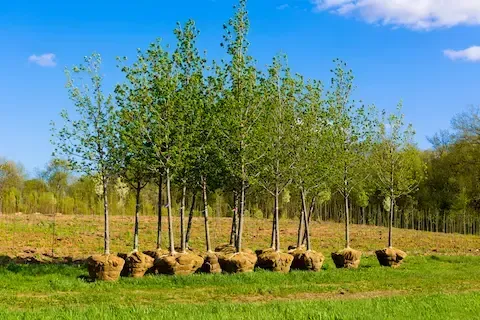
Strong Trees to Plant Across Oregon City This Spring
Spring is one of the best windows for getting trees in the ground across Oregon City. The soil is workable, rainfall is still reliable, and new root systems have months to establish before summer heat settles in. But not every tree is a strong candidate for this region. The Willamette Valley's combination of heavy clay soils, wet winters, and dry summers creates conditions that thin out the list quickly. The trees that perform best here are the ones that evolved alongside those conditions or have proven over decades that they can handle them without constant intervention.
Why Oregon City's Soil and Climate Demand Careful Selection
Oregon City sits at the edge of the Willamette Valley, where soils shift between clay-heavy lowlands and rockier hillside terrain depending on where you are. That matters enormously for tree selection. Clay holds moisture through winter and early spring, which some species love and others simply cannot tolerate. During summer, that same clay can crack and dry, stressing shallow-rooted trees that haven't had time to push deep. If you plant a species that isn't adapted to that swing, you're likely to see dieback, root rot, or slow establishment that never quite catches up.
Rainfall patterns also play a role. Oregon City averages around 47 inches of precipitation annually, but almost all of it falls between October and April. From June through September, trees are largely on their own unless you're irrigating. That dry season is where poor selections reveal themselves. A tree that looks healthy through spring can struggle badly by August if it isn't built for summer drought tolerance.
Native Species That Belong in Oregon City Landscapes
Native trees are the strongest starting point for most property owners. They're already calibrated to local rainfall cycles, soil chemistry, and temperature ranges. Several stand out as particularly well-suited to spring planting across Oregon City.
Oregon white oak is one of the region's most resilient large trees. It tolerates both wet winters and dry summers, grows well in clay, and provides exceptional canopy over time. It's slower to establish than some species, but once rooted, it rarely needs intervention. Oregon white oaks are also ecologically valuable, supporting dozens of native insect and bird species.
Vine maple fits well in smaller spaces and partially shaded areas, especially beneath existing tree canopy. It stays multi-stemmed and relatively compact, making it practical for yards where overhead power lines or structures limit vertical growth. Its fall color is reliable and attractive in the Oregon City context.
Western red cedar performs strongly in low-lying, wetter areas of the property. If you have a section that holds standing water after heavy rain, western red cedar is one of the few trees that will thrive there rather than decline. It grows tall and dense, providing year-round screening and wind protection.
Big-leaf maple is a fast grower compared to oak, which can be an advantage if you need canopy coverage sooner. It handles clay soils and seasonal moisture well, though it does need some room to spread. It's not ideal for tight spaces, but on larger lots it earns its place quickly.
Adapted Non-Natives Worth Considering
Not every situation calls for a native species. Sometimes a property needs something specific in terms of size, shape, or function, and a non-native adapted to Pacific Northwest conditions can be the right call. For tree planting projects where structure or screening is a priority, a few options consistently prove out.
Yoshino cherry is widely planted across Oregon City and blooms reliably each spring. It's not a long-lived tree and requires some attention as it matures, but for ornamental value in the short-to-medium term, it delivers. Site it with good drainage and room for its canopy to develop.
Ginkgo biloba is remarkably tolerant of urban conditions, including compacted soil and variable moisture. It grows slowly but lives for centuries when established. Male varieties avoid the mess associated with female trees. If you're planting near a driveway or street edge, ginkgo holds up better than most.
Heritage river birch handles wet sites well and adds visual interest with its exfoliating bark. It's faster-growing than most oaks and does particularly well in the lower elevations of the city where drainage is slower. It does attract aphids in some years, so placement matters.
Spring Planting Practices That Affect Long-Term Success
Selecting the right species matters, but how you plant it determines whether that selection pays off. A few practices separate trees that thrive from trees that merely survive.
- Dig a wide hole, not a deep one. Roots spread laterally, not straight down. A hole two to three times the width of the root ball allows roots to expand into loosened soil rather than circling inside compacted ground.
- Plant at the right depth. The root flare should sit at or slightly above grade. Planting too deep is one of the most common causes of slow decline in young trees.
- Mulch correctly. A three-to-four inch ring of mulch conserves moisture and moderates soil temperature, but keep it away from the trunk. Mulch piled against bark creates rot conditions.
- Water consistently through the first two summers. Even drought-tolerant natives need support while their root systems are establishing. Deep, infrequent watering encourages roots to go down rather than stay shallow.
For more context on how species selection varies by yard type and property conditions, read more on tree planting selection backyards, which covers how to match trees to specific backyard configurations across the Oregon City area.
Timing and Local Context for Oregon City Properties
March through May is the ideal planting window for most of the species listed here. The ground is warm enough for root activity but not yet stressed by summer conditions. Planting earlier in that window gives trees more time to anchor before the dry months begin. Later spring plantings can work but require more consistent irrigation through the first summer.
Properties in Oregon City's hillside neighborhoods, particularly those with rockier or shallower soils, may need extra soil amendment at planting time. The lowland areas near the Willamette River tend to have deeper, richer soils but can also experience more significant flooding events in wet years. Knowing what your specific site conditions look like before you plant saves significant effort down the road.
A well-chosen tree in Oregon City will outperform a poorly matched species every time, regardless of how much care you put into the latter. Start with what belongs here, plant it correctly, and give it water through the first two summers. The investment in getting the selection right pays back in decades of canopy with minimal ongoing effort.
