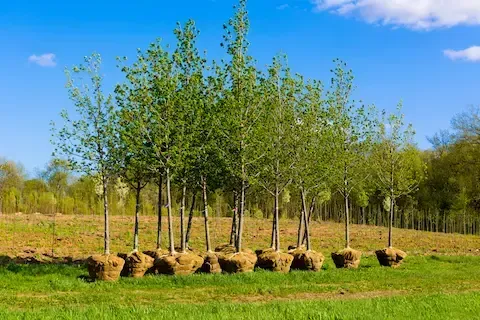
Tree Planting and Selection in Oregon City Backyards
Choosing the right tree for your Oregon City backyard is one of the most consequential decisions you can make for your property. A well-placed, well-matched tree adds shade, screens unwanted views, supports local wildlife, and builds long-term property value. A poorly chosen one costs money, causes structural damage, and often ends up removed within a decade. Oregon City sits at the southern edge of the Portland metro area, where the Willamette Valley's distinctive clay soils, wet winters, and dry summers create growing conditions that reward native and regionally adapted species while punishing trees imported from drier or more forgiving climates.
Understanding Oregon City's Soil and Climate Before You Plant
Oregon City occupies the Willamette Valley floor and the bluffs above it, and that geography matters more than most homeowners realize. The valley soils here are dominated by Jory and Woodburn series clays — dense, slow-draining, and nutrient-rich when managed correctly, but suffocating to trees that require loose, well-aerated root zones. During the rainy season from October through April, these soils stay saturated for weeks at a time. Then from June through September, they bake into something close to hardpan with almost no available moisture.
This cycle of extremes is the single most important factor in your tree selection. Species that evolved in Mediterranean climates, sandy soils, or consistently moist environments rarely survive long term in this environment without constant intervention. Native trees, by contrast, have spent thousands of years adapting to exactly these conditions. Before purchasing any tree, you should understand your specific backyard's drainage patterns, canopy exposure, proximity to structures, and overhead utility lines. A site that floods for two weeks every February requires a completely different approach than a south-facing slope that bakes in July sun.
Native Trees That Thrive in Oregon City Conditions
When selecting native trees for Oregon City backyards, a handful of species consistently outperform the rest across typical residential sites.
Oregon White Oak (Quercus garryana) is arguably the most valuable tree you can plant in the Willamette Valley. It is deeply drought-tolerant once established, handles clay soil better than most oaks, and supports more than 500 species of native insects and birds. Oregon white oak grows slowly, which makes it a long-term investment, but the canopy it eventually produces is broad, handsome, and essentially self-sufficient after the first three to five years. Plant it where it has room — a mature specimen can reach 50 feet wide — and keep it away from foundations and sewer lines.
Vine Maple (Acer circinatum) is the ideal small-space native tree for Oregon City yards where scale matters. It rarely exceeds 20 feet and often grows in a graceful multi-stemmed form that provides year-round interest — green leaves in spring and summer, brilliant orange and red in fall, and sculptural branching in winter. Vine maple tolerates the heavy shade found on the forested bluffs east of the Willamette, and it also handles the wetter low-lying spots near McLoughlin Boulevard without complaint.
Douglas Fir (Pseudotsuga menziesii) is the signature tree of the Pacific Northwest, and it earns that status. It grows quickly, provides dense year-round screening, and thrives in Oregon City's climate as long as you give it enough space. For most residential backyards, Douglas fir is a poor choice within 30 feet of any structure, but on larger lots or property edges, it provides an unmatched windbreak, wildlife habitat, and visual anchor. The mature trees you see on the bluffs overlooking the Clackamas River represent what decades of proper siting look like.
Red Alder (Alnus rubra) deserves more attention in wet, low-lying Oregon City lots. It is one of the fastest-growing native trees in the region, tolerates standing water, and actively improves soil nitrogen through root associations with nitrogen-fixing bacteria. It is not a forever tree — 60 to 80 years is a typical lifespan — but for creating rapid canopy cover and stabilizing erosion-prone stream banks or wet edges, nothing beats it for speed and local adaptability.
Pacific Dogwood (Cornus nuttallii) fills the ornamental niche for homeowners who want something visually striking without committing to a large canopy. Its spring bloom is one of the finest displays of any native tree, and it stays compact enough for most residential lots. It prefers partial shade and moist, well-drained soil, making it an excellent understory planting beneath taller trees or along the northern edges of the property where full sun is unavailable.
Spacing, Siting, and the Mistakes Most Homeowners Make
The most common tree planting mistake in Oregon City backyards is underestimating mature size. A five-gallon nursery tree looks manageable at planting but may reach 60 feet tall and 40 feet wide within 30 years. Before you plant, research the realistic mature dimensions of your chosen species and map them against your property lines, structures, driveways, and utility lines.
Overhead utility lines are a specific concern in Oregon City. Many residential streets still carry distribution lines at 30 to 40 feet, and trees planted beneath them create a perpetual pruning conflict. If your planting site is beneath or near overhead lines, limit your selection to trees that mature below 20 feet — vine maple, Pacific dogwood, or similar small-scale species. Tall-growing trees planted under utilities inevitably require aggressive and aesthetically damaging crown reduction that shortens the tree's life and appearance.
Root zone conflicts with foundations, sidewalks, and sewer lines are the other major siting error. Clay soils compress around roots, which can redirect root growth toward the path of least resistance — often toward older clay or cast-iron sewer pipes. As a general rule, keep any medium to large tree at least 15 feet from a foundation and at least 10 feet from a sewer lateral. For large-canopy species like Oregon white oak or Douglas fir, double those distances.
Planting depth matters more than most homeowners appreciate. The root flare — the point where the trunk widens to meet the root system — should sit at or slightly above grade. Planting too deep, which is the default outcome when homeowners simply drop a balled-and-burlapped tree into an undersized hole, smothers the root flare, promotes trunk rot, and kills trees slowly over three to ten years. Dig your hole two to three times as wide as the root ball but no deeper. Remove burlap and wire baskets entirely. Backfill with native soil, not amended mix, which creates a perched water table effect in clay soils.
When to Plant and How to Establish Trees in Oregon City
Oregon City's climate creates a clear optimal planting window. Fall planting — September through November — takes advantage of cooling temperatures and increasing rainfall to allow root establishment before summer drought. Trees planted in fall arrive at their first summer with a full rainy season of root growth behind them, making them dramatically more drought-resilient than spring-planted trees. Spring planting is acceptable but requires vigilant irrigation through the first dry season.
Summer planting in Oregon City is a high-risk strategy for most species. Soil temperatures are high, moisture is absent, and newly installed trees face immediate drought stress with no root system to draw on. If you must plant in summer, choose the most drought-tolerant native species available, water deeply two to three times per week, and apply a four-inch ring of mulch at least three feet out from the trunk to retain soil moisture.
Establishment watering is the single most impactful thing you can do in the first two years. Deep, infrequent watering encourages roots to grow downward rather than laterally toward the surface. For most trees in Oregon City's clay soils, watering deeply once or twice per week during the dry season is more effective than shallow daily watering. A slow trickle from a hose for 20 to 30 minutes at the dripline — not against the trunk — is the practical approach for most residential plantings.
Non-Native Trees Worth Considering in Oregon City
Not every successful tree in Oregon City backyards is native. Several regionally adapted non-native species perform reliably in local conditions without becoming invasive problems.
Katsura tree (Cercidiphyllum japonicum) is a standout choice for medium to large residential lots. It handles clay soils well, tolerates wet winters, provides exceptional fall color, and grows into a graceful form without demanding constant maintenance. Japanese stewartia is another reliable performer for partial-shade sites, offering multi-season interest through flowers, fall color, and distinctive exfoliating bark. Both species tolerate Oregon City's climate extremes without the cultural complications of more sensitive ornamental trees.
What to avoid: Norway maple, which is invasive in Oregon and illegal to sell in the state; Lombardy poplar, which is short-lived and produces aggressive surface roots in clay; and ornamental pears, particularly the Bradford pear varieties that have become structurally problematic and invasive across much of the Pacific Northwest.
Working with Local Professionals for Larger Planting Projects
For single-specimen plantings in open areas, an informed homeowner with the right tools can handle the installation competently. For larger projects — multiple trees, difficult access, proximity to utilities or structures, or steeply sloped terrain common on the east-facing bluffs above the Clackamas River — professional guidance is worth the investment. A certified arborist familiar with Oregon City's soil conditions, municipal code, and common failure patterns will save you money over the life of the planting by matching species to site correctly from the start.
Professional tree planting services also carry the equipment necessary to properly install balled-and-burlapped trees without damaging the root system during transport and placement — a common source of planting failure that isn't visible until the tree declines one or two years later. If you are planning a multi-tree installation or working on a slope near a retaining wall or drainage feature, a professional consultation before purchasing trees will prevent costly errors.
If you're reshaping a backyard that already has existing stumps from removed trees, you'll want those cleared before installing new plantings. Read our guide to stump grinding and removal to understand your options before finalizing your planting layout.
Long-Term Perspective on Tree Investment in Oregon City
Trees are the longest-horizon investment most homeowners make in their property. A Douglas fir planted this fall will still be standing when your grandchildren are adults. An Oregon white oak planted at the right distance from your home will add measurable appraised value, reduce cooling costs through canopy shade, and provide wildlife habitat for generations. The key decisions — species selection, siting, planting depth, and establishment care — all happen in the first season. Get those right, and the tree largely takes care of itself. Get them wrong, and no amount of later intervention fully corrects the trajectory.
Oregon City's combination of Willamette Valley clay, wet winters, and summer drought makes it a demanding but ultimately rewarding environment for the right trees. Prioritize native and regionally adapted species, give them appropriate space, plant in fall where possible, and invest in proper establishment watering. The result is a backyard canopy that improves every year and eventually becomes one of the most valuable and irreplaceable features of your property.
