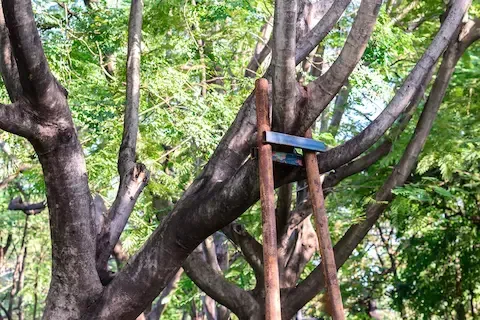
Tree Cabling and Bracing in Oregon City Yard Trees
Mature yard trees in Oregon City are among the most valued features of a residential property. Bigleaf maple, Oregon white oak, Douglas fir, and black walnut grow to impressive scale in Clackamas County neighborhoods, providing shade, habitat, and character that takes generations to develop. But as these trees age, structural weaknesses can emerge that put both the tree and the property beneath it at risk. Tree cabling and bracing offers a practical, proven method for extending the life of trees that are structurally compromised but otherwise healthy — keeping them standing, safe, and productive for many more years without resorting to removal.
What Tree Cabling and Bracing Actually Does
Cabling and bracing are supplemental support systems installed in a tree to reduce the risk of branch or stem failure. They do not cure disease, eliminate decay, or eliminate all risk. What they do is redistribute mechanical load across the tree so that a weak attachment point — such as a codominant stem or an overextended horizontal limb — is less likely to split or fail under stress from wind, rain, ice, or its own weight.
Cabling involves installing a flexible steel or synthetic cable between two or more limbs or stems in the upper canopy. The cable limits the distance those limbs can spread apart during a storm, reducing the likelihood of a split at the union. Bracing uses threaded steel rods installed through the trunk or branch attachment point to provide rigid support at the point of weakness itself. These two systems are often used together, with the brace stabilizing the union and the cable limiting the load placed on that union from above.
Oregon City's wet winters and frequent windstorms make structural support especially relevant. A tree that holds up fine through a dry summer can split during a February wind event when the canopy is wet and heavy. Proper tree bracing installed before those conditions arrive gives the tree a much better chance of surviving intact.
Trees That Commonly Need Support in Oregon City Yards
Not every tree needs cabling. The practice is specifically suited to trees with identifiable structural defects that create meaningful failure risk. In Oregon City yards, several species and structural situations come up repeatedly.
Bigleaf maple is the most common candidate. This species frequently develops codominant stems — two or more main trunks that grow from a single origin point — with narrow v-shaped unions that are inherently weak. As these trees grow larger and heavier, the union can crack under stress. Because bigleaf maples are fast-growing and common throughout the Canemah, Beavercreek Road, and South End neighborhoods of Oregon City, the problem appears frequently in mature residential yards.
Oregon white oak presents a different challenge. These trees grow with wide-spreading horizontal limbs that can become overextended and heavy over time. Unlike maples, which tend to fail at the union, oaks are more likely to lose a major limb from mid-trunk. Installing a cable to redistribute weight from a particularly long horizontal limb can prevent that failure while preserving the oak's characteristic form.
Other candidates include old ornamental cherries with split crowns, large street-side elms with included bark at branch attachments, and any mature tree where a previous wound or decay pocket has compromised the structural integrity of a main stem. Trees near homes, driveways, play areas, or parked vehicles are prioritized because a failure in those zones creates real property and safety consequences.
Evaluating Whether Cabling Is the Right Choice
Before any hardware goes into a tree, a thorough structural evaluation needs to happen. Not every weak-looking tree is a good cabling candidate, and not every tree with a codominant stem needs intervention. The decision depends on several factors considered together.
First is the overall health of the tree. A tree with active decay at the root collar, severe fungal infection, or significant internal hollow may not be a good candidate for cabling because the hardware itself cannot compensate for structural failure originating from decay rather than a weak union. In those cases, removal may be the safer long-term recommendation.
Second is the specific geometry of the defect. The angle of a codominant union, the presence or absence of included bark, the weight and length of the limb in question, and the height at which the cable would need to be installed all factor into whether a cable will actually function as intended. A cable installed at the wrong height or angle provides little benefit and can create a false sense of security.
Third is the target zone below the tree. A compromised limb hanging over an open lawn is a different risk calculation than the same limb hanging over a child's bedroom. Oregon City properties vary significantly in how much space surrounds mature trees, and that context shapes the urgency and method of any intervention.
For a comprehensive structural assessment, our guide to ISA arborist consultations in Oregon City yards explains what that evaluation process involves and what documentation you should expect from a qualified arborist.
Installation Standards and Hardware
Tree cabling and bracing work is governed by ANSI A300 standards, which are the American National Standards for tree care operations. A reputable arborist in the Oregon City area will follow these standards for cable placement height, hardware specifications, and ongoing inspection requirements.
For cabling, the standard requires that cables be installed at approximately two-thirds of the distance between the weak union and the top of the included stems. This placement maximizes the mechanical advantage of the cable. Modern installations most often use high-strength steel cable or, increasingly, synthetic fiber rope systems that are flexible enough to allow some natural movement while still limiting extreme load events.
For bracing, threaded rods are installed through the union itself, perpendicular to the plane of weakness. The rod passes completely through both stems and is secured with washers and nuts on each side. This is a rigid system that directly reinforces the joint. The rod size is determined by the diameter of the stems being connected.
All hardware should be rated for the expected loads based on the size and species of the tree. Undersized hardware can fail; oversized hardware can create stress concentrations that damage the wood around the installation point. Experienced arborists working in Clackamas County understand the wind load patterns specific to Oregon City's position in the Willamette Valley and specify hardware accordingly.
Maintenance and Inspection of Installed Systems
Cabling and bracing systems are not install-and-forget interventions. Trees grow, and as they grow, the hardware installed in them must be monitored and adjusted. ANSI standards recommend inspection at least every two years for established systems, and annually for trees in high-risk locations or with known decay.
During an inspection, an arborist checks whether the cable or rod has become embedded in the wood as the tree has grown around it. Embedded hardware creates stress concentrations and can split the wood it was meant to protect. If embedding is beginning, the hardware may need to be repositioned or the rod replaced with a longer one. The arborist also checks the anchoring points in the canopy, looking for any signs that the limbs have shifted or that new defects have developed near the attachment.
Oregon City's climate creates conditions where this kind of monitoring matters. Wet winters followed by dry summers cause wood to expand and contract. Combined with the tree's natural growth, that movement affects how hardware fits over time. An arborist familiar with the conditions in this part of Clackamas County will know what to look for and how frequently to check.
What Cabling Cannot Do
It is important to be clear about the limits of supplemental support systems. Cabling and bracing reduce risk — they do not eliminate it. A tree with a cabled union can still fail if the decay beneath that union progresses, if an ice storm deposits an exceptional load, or if root failure occurs independently of the above-ground structural work.
No honest arborist will tell you that a cabled tree is as safe as a structurally sound tree. What a good arborist will tell you is whether cabling meaningfully reduces the risk in your specific situation, what the ongoing commitment looks like, and at what point removal becomes the more responsible choice. That conversation should happen transparently before any work begins.
Cabling is also not a substitute for good pruning. In many cases, removing a portion of the weight from an overextended limb through structural pruning will do more to reduce failure risk than installing a cable while leaving the full weight in place. The two interventions are often combined, with pruning reducing the load and cabling providing residual protection against extreme events.
The Long-Term Value of Keeping Mature Trees
The practical case for cabling is straightforward: it is almost always less expensive than removing a large tree and far less expensive than dealing with the consequences of an uncontrolled failure. Large tree removal in Oregon City, depending on the species and site conditions, can run into several thousand dollars. Property damage from a failed limb or stem can run much higher.
Beyond the financial calculation, there is something worth acknowledging about the trees themselves. A 150-year-old Oregon white oak in an Oregon City yard is not replaceable on any human timescale. A bigleaf maple with a 30-inch trunk diameter took decades to reach that size. When cabling can safely extend that tree's life by 20 or 30 more years, the value created — in shade, habitat, air quality, property value, and simple aesthetic presence — is substantial.
Structural support work, done properly and monitored consistently, is one of the most direct ways to honor the investment those trees represent and to keep mature Oregon City landscapes intact for the next generation of residents who will live and grow beneath them.
