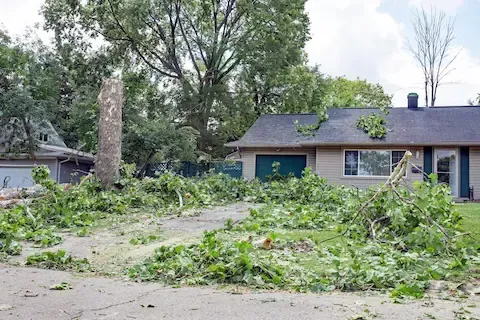
Storm Damage Tree Cleanup Across Oregon City Yards
Understanding Storm Damage in Oregon City Properties
When severe weather strikes Oregon City, your trees face multiple threats that can create dangerous situations across your property. High winds, heavy rain, ice accumulation, and sudden temperature changes can cause branches to snap, entire trees to uproot, or structural damage that compromises tree stability. Understanding these damage patterns helps you approach cleanup systematically and safely.
Storm damage typically manifests in several ways across Oregon City yards. Split trunks occur when wind forces exceed the tree's flexibility, creating vertical cracks that weaken the entire structure. Broken branches may hang precariously, supported only by bark strips or neighboring limbs. Root upheaval happens when saturated soil cannot anchor trees against wind pressure, causing partial or complete uprooting. Crown damage involves the loss of major limbs from the tree's canopy, affecting both stability and future growth potential.
The immediate aftermath of a storm requires careful assessment before beginning any cleanup work. Damaged trees can shift unexpectedly, electrical lines may be compromised, and unstable branches can fall without warning. Your safety depends on recognizing these hazards and addressing them in the proper sequence.
Initial Safety Assessment and Hazard Identification
Your first priority involves conducting a thorough safety walk around your property to identify immediate dangers. Look for downed power lines, which may still be energized even if they appear inactive. Maintain at least 35 feet of distance from any downed electrical equipment and contact Pacific Power immediately if you discover compromised lines on your Oregon City property.
Examine trees for hanging branches, also called "widow makers" in the industry. These partially detached limbs can fall suddenly when disturbed by wind, vibration, or your presence below. Mark these hazards with bright ribbon or spray paint to ensure everyone on your property recognizes the danger zone.
Check for trees leaning against structures, other trees, or utility infrastructure. Even if buildings appear undamaged, the continued pressure from a leaning tree can cause progressive structural problems. Document these situations with photographs for insurance purposes and professional consultation.
Assess ground conditions around damaged trees. Storm-saturated soil may remain unstable, and root systems may be compromised even when trees appear upright. Step carefully around the base of trees, watching for soft or uneven ground that indicates root displacement.
Developing Your Cleanup Strategy and Priorities
Effective storm cleanup requires a systematic approach that addresses the most critical issues first. Begin by categorizing damage into three priority levels: immediate safety hazards, property protection needs, and aesthetic restoration work.
Priority one involves removing or stabilizing anything that threatens people or structures. This includes hanging branches over walkways, trees touching buildings, and debris blocking emergency access routes. These situations require immediate attention, often from professional crews with proper equipment and insurance coverage.
Priority two addresses property protection and utility restoration. Clear debris from drains and gutters to prevent water damage during the next storm. Remove branches from rooflines, vehicles, and fencing before they cause additional damage. Focus on restoring normal access patterns around your property.
Priority three encompasses cleanup that improves appearance and long-term tree health but doesn't pose immediate risks. This includes removing scattered branches, cleaning up leaf debris, and addressing cosmetic damage to healthy trees. These tasks can often wait until more pressing issues are resolved.
Create a written plan documenting your priorities and timeline. This documentation proves valuable for insurance claims and helps coordinate work if you need professional assistance for complex situations.
Professional Assessment and Documentation Requirements
Many storm-damaged trees require professional evaluation to determine the safest and most effective restoration approach. Certified arborists can assess structural integrity, identify hidden damage, and recommend appropriate treatment or removal strategies.
Professional assessment becomes essential when dealing with large trees, complex damage patterns, or situations involving utilities and structures. An experienced crew can evaluate root damage that isn't visible from ground level, assess the likelihood of future failure, and determine whether partial or complete removal provides the best long-term solution.
Documentation supports both safety planning and insurance claims processing. Photograph damage from multiple angles, including close-ups of specific problems and wide shots showing overall impact. Include reference objects in photos to demonstrate scale and severity.
Written assessments from licensed professionals carry significant weight with insurance companies and provide legal protection if disputes arise. These evaluations should detail specific damage, recommended actions, timeline for completion, and estimated costs for necessary work.
For complex situations involving multiple trees or extensive property damage, consider requesting a comprehensive storm cleanup evaluation that prioritizes work and provides detailed cost estimates for each phase of restoration.
Safe Debris Removal and Equipment Considerations
Removing storm debris safely requires appropriate tools, techniques, and realistic assessment of your capabilities. Many property owners can handle small branch cleanup and light debris removal, but significant damage often exceeds the scope of typical homeowner equipment and expertise.
For branches under four inches in diameter, standard pruning tools including hand saws, loppers, and pole pruners can handle most cleanup tasks. Always cut branches properly, making clean cuts just outside the branch collar to promote healing and prevent decay. Never leave stubs, which invite pest problems and compromise tree health.
Larger branches and trunk sections require professional equipment including chainsaws, rigging systems, and sometimes cranes or bucket trucks. These tools demand specialized training and safety protocols that most property owners haven't developed. Attempting complex removal work without proper experience creates significant safety risks and potential liability issues.
Ground conditions complicate debris removal, especially when soil remains saturated from storm activity. Heavy equipment can create lasting damage to lawns and landscaping if operated on soft ground. Professional crews understand how to minimize this impact through proper timing and equipment selection.
Disposal options vary depending on the volume and type of debris generated. Oregon City provides seasonal yard debris collection, but storm cleanup often produces volumes that exceed normal service limits. Commercial disposal services or temporary dumpster rental may become necessary for major cleanup projects.
Tree Preservation and Recovery Strategies
Not every storm-damaged tree requires removal. Many trees can recover from significant damage when properly treated, maintaining their value and continuing to provide environmental benefits to your property.
Proper pruning techniques can help damaged trees recover by removing broken branches, eliminating stress points, and encouraging healthy new growth. The key involves making cuts that promote natural healing while maintaining the tree's structural integrity and aesthetic appeal.
Timing affects recovery success significantly. Trees have optimal windows for major pruning work that correspond to their natural growth cycles. Emergency situations may require immediate action, but non-urgent restoration work should align with these biological rhythms when possible.
Support systems can help compromised trees through the recovery period. Cabling and bracing systems provide structural support for trees with split trunks or weakened branch attachments. These installations require engineering analysis to ensure they provide adequate support without creating new stress points.
Soil care supports tree recovery by addressing root zone damage and improving growing conditions. Storm impact often compacts soil around trees, reducing water infiltration and air movement to root systems. Proper aeration and organic matter incorporation can restore healthy soil conditions.
Insurance Claims and Documentation Best Practices
Storm damage cleanup often involves significant expenses that may be covered under homeowner's insurance policies. Proper documentation and claim procedures can help recover these costs and ensure adequate resources for complete restoration.
Contact your insurance company immediately after discovering storm damage, even if you're unsure whether the damage exceeds your deductible. Early notification establishes the claim timeline and ensures you understand coverage limitations and requirements.
Document everything thoroughly before beginning cleanup work. Insurance adjusters need clear evidence of damage extent and severity to process claims accurately. Include photographs of damaged trees, affected structures, and debris accumulation. Take pictures from multiple angles and distances to provide complete documentation.
Keep detailed records of all cleanup expenses, including professional services, equipment rental, disposal fees, and replacement materials. Obtain written estimates from licensed contractors for major work, even if you plan to complete some tasks yourself.
Understand the difference between emergency stabilization work and complete restoration. Most policies cover immediate safety measures but may have different requirements for aesthetic improvements or landscape replacement. Clarify these distinctions with your adjuster before proceeding with extensive work.
Consider supplemental coverage for valuable trees and landscaping. Standard homeowner's policies often provide limited coverage for vegetation, but additional riders can protect significant landscape investments including mature trees and specialty plantings.
Preventing Future Storm Damage Through Proper Tree Care
Regular maintenance significantly reduces storm damage risk by addressing structural problems before they become critical during severe weather. Proactive tree care represents an investment in property protection and long-term landscape value.
Annual pruning removes dead, diseased, and weakly attached branches that typically fail first during storms. Proper pruning also improves tree structure by reducing wind resistance and eliminating competing leaders that create weak attachment points.
Root zone management prevents many storm failures by maintaining healthy, well-anchored root systems. Avoid soil compaction around trees, provide adequate water during dry periods, and protect roots from construction damage that weakens anchoring capacity.
Species selection for replacement trees should consider storm resistance characteristics. Some tree varieties withstand severe weather better than others due to their branching patterns, wood strength, and root development characteristics. Local nurseries and extension services can recommend appropriate species for Oregon City growing conditions.
Professional monitoring identifies developing problems before they become critical. Regular assessment by qualified arborists can detect structural issues, disease problems, and environmental stresses that increase storm damage susceptibility. For comprehensive tree health management, explore more on emergency tree service across Oregon City to understand the full range of preventive services available.
Creating defensible space around valuable trees reduces damage from falling debris and provides access for emergency equipment if problems develop. Proper spacing and selective removal of hazardous trees protects your investment in healthy, well-maintained specimens.
